Friday, May 12, 2023

                                                      May 12, 2023 


MY CORNER by Boyd Cathey


Ukraine, the Neoconservatives and the LGBTQ Global Agenda


Friends,

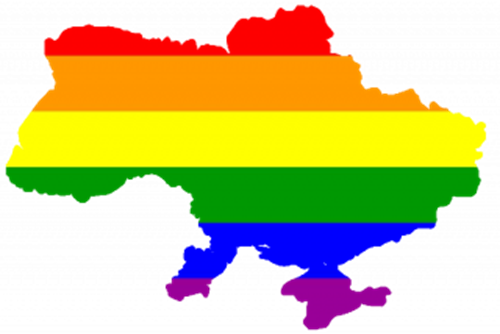
I pass on below three informative articles. They originate from BREIBART News, REUTERS, and BUSINESS INSIDER; and they detail the acceptance of same sex couples in the Ukrainian Army, and, indeed, the growing acceptance of even trans ideology in Ukraine (including statements made by V. Zelensky that he will “revisit” the issue). No doubt, the large degree of American control and influence has much to do with this. When our benighted nation, through its foreign policy tentacles, wants something done in our client countries (which Ukraine has become), then it gets done, whether the native population wants it or not. What matters for the US is if the Elites in those countries act when our globalists demand they act. 

No wonder that the Far Left pushes frenetic and unquestioning support for the ex-porno clown Zelensky's regime (at the expense of the Ukrainian people). Everything our foreign policy wonks touch and then dominate becomes rotten, infected by evil. Our record, whether in Bosnia, Libya, Iraq, Somalia, Syria, Afghanistan...or now in Ukraine, is one of unrelieved destruction of traditional cultures and morality, religious faith and belief, and the imposition of a foul global hegemony, intolerantly pagan and Godless, all in the name of “liberal democracy.”

Hundreds of thousands of Christians, in some of the most ancient Christian communities in the world in Iraq and Syria, have been massacred or displaced by American military intervention or the use of American-armed client terrorist groups (recall the late and unlamented John McCain’s embrace of ISIS-affiliated terrorists in Syria).  The fanatical ideological zeal of the dominant foreign policy Neoconservatives to construct a secular world, controlled by an anti-Christian globalist elite (e.g. World Economic Forum, EU, NATO, UN, etc.), and their scarcely disguised hatred for Western Christianity are eerie carry-overs from—a reminder of—their internationalist Trotskyite roots.

Indeed, for many Neocons does not their secular globalism in a way actually invert the salvific promises made to Israel in the Old Testament, especially as many of the leading Neoconservatives have Eastern European and Russian Jewish descent—and lingering memories of “bad old Russia” and historic Christian prejudice?

A remarkable admission of this genealogy came in 2007, in the pages of the once-conservative National Review. Here one finds the expression of sympathies clearly imported from the onetime Far Left and presented by contributor Stephen Schwartz: “To my last breath, I will defend Trotsky who alone and pursued from country to country and finally laid low in his own blood in a hideously hot house in Mexico City, said no to Soviet coddling to Hitlerism, to the Moscow purges, and to the betrayal of the Spanish Republic, and who had the capacity to admit that he had been wrong about the imposition of a single-party state as well as about the fate of the Jewish people. To my last breath, and without apology.” (See Paul Gottfried, “Dancing on a Hero’s Grave,” Takimag.com, May 29, 2007.)

Over the decades since the 1960s, the Neocons migrated to a more conservative and anti-Communist viewpoint, supposedly due to their opposition to anti-semitic Stalinism, but actually in reality more because of their fear and hatred of nationalism. By the 1990s they were in virtual control of what has become known as “ConInc,” AKA Establishment “conservatism incorporated.” Older conservatives—paleoconservatives and Southern traditionalists—were exiled to the ineffectual margins.

In 2016 Donald Trump (perhaps not fully aware of his role) threatened that consensus, and for that reason he had to be savaged, denounced, impeached, defeated. He had, to quote Hillary Clinton, unleashed “the Deplorables,” the MAGA Nation, which proceeded to gain back swathes of the conservative grass roots.

Still, many Republicans, especially those most prominently in the DC Uniparty, remain joined at the hip with the fanatical Left in support of far too many shared nostrums, most especially a zealous globalism and disastrous American overreach, and inflicting new “civil rights” on the American citizenry (which were little more than new layers of immorality).

And the expansion of American hegemony globally brings with it the necessity on the part of newly-submissive client states to dismantle and discard their religious and moral traditions. Thus, our embassies around the world often symbolically fly “Gay Pride” flags, while our foreign aid packages are tied to abolishing or removing “inequities” against “oppressed” groups, such as homosexuals, women, and trans people…and all the while dozens of NGOs work feverishly on the ground to change views on a variety of questions: all in the name of implanting the fruits and benefits of “liberal democracy.”

Thus, we should not be surprised at what is occurring in Ukraine: growing support for same sex marriage, the advent of active LGBTQ organizations, and the rise of support for them. After all the United State foreign policy establishment was largely responsible for the February 2014 coup d’etat that installed an American puppet regime in Kiev. And, certainly, the price for becoming an American minion is implementing the agenda that whoring regimes must accept.

Read on.

------------------------------------------------------------------------------------------------

Ukraine Debuts LGBTQ ‘Unicorn’ Troops

https://www.breitbart.com/social-justice/2022/05/31/ukraine-debuts-lgbtq-unicorn-troops/

JOHN HAYWARD   31 May 2022 

Ukraine’s gay, lesbian, and transgender military volunteers are adding an official unicorn patch to their uniforms, right under the national flag.


The patch is meant as a rebuke to Russian rhetoric about “de-Nazification” and Russian rhetoric about excluding homosexuals in the military forces of former Soviet territories [e.g., Russia] The unicorn patch became popular with Ukraine’s LGBTQ community after Russia annexed Crimea in 2014. Since there were supposedly no gay soldiers in the Russian army, gays sarcastically chose the mythological unicorn as their symbol.


Germany’s Deutsche Welle (DW) reported last summer that Ukrainian soldiers began coming out in greater numbers in 2018, including those deployed to fight Russia-backed separatists in eastern Ukraine. Even then, gay Ukrainian troops thought identifying themselves could help counter Russian propaganda about fascists running Kyiv.


“One of our aims is to expose the lies of Russian propaganda myths that claim Ukraine is being ruled by a ‘neo-Nazi junta.’ How could there be talk of neo-Nazis in an army that has many gay-friendly units, and in which gay and lesbian active-duty and veteran service members can come out without fear?” Viktor Pylypenko, founder of a group called Ukrainian LGBT Soldiers, told DW in June 2021.


Similar sentiments were expressed by “unicorn” troops who spoke to Reuters on Tuesday. They said there was “no aggression, no bullying” when they volunteered for front-line duty against the Russian invaders, and their commanders said homophobia would not be tolerated. “The thing I’m worried about is that in case I get killed during this war, they won’t allow Antonina to bury me the way I want to be buried. They’d rather let my mum bury me with the priest reading silly prayers … But I am an atheist and I don’t want that,” one of the unicorn soldiers said, referring to his transgender partner.


LGBTQ recruits say they are deeply concerned with the repression they would face from Russia if Ukraine is conquered. They point to the harsh treatment of gays in Donbas, where separatists aligned with Russia-controlled towns and cities before the massive Russian invasion began in February, and the vicious treatment of gays by Russia’s Chechen allies. Whatever complaints about discrimination gay Ukrainians had before the war, they seem to be in agreement that life under Russian rule would be worse.


“The LGBTQ+ community in Ukraine is in huge danger should Russia win. If Russia wins, it means darkness. There will be no freedom, no opportunity to be yourself, no rights for diverse communities,” territorial defense volunteer Vlad Shast told Forbes in March.


-----------------------------------------------------------------------------------------------------------


Ukraine's 'unicorn' LGBTQ soldiers head for war

https://www.aol.com/news/ukraines-unicorn-lgbtq-soldiers-head-071702718-144234922.html

HORACI GARCIA  May 31, 2022, 9:42 AM

KYIV (Reuters) - As volunteer fighters Oleksandr Zhuhan and Antonina Romanova pack for a return to active duty, they contemplate the unicorn insignia that gives their uniform a rare distinction - a symbol of their status as an LGBTQ couple who are Ukrainian soldiers.

Members of Ukraine's LGBTQ community who sign up for the war have taken to sewing the image of the mythical beast into their standard-issue epaulettes just below the national flag. The practice harks back to the 2014 conflict when Russia invaded then annexed the Crimean Peninsula from Ukraine, "when lots of people said there are no gay people in the army," actor, director and drama teacher Zhuhan told Reuters as he and Romanova dressed in their apartment for their second three-month combat rotation. "So they (the lesbian, gay, bisexual, transgender and queer community) chose the unicorn because it is like a fantastic 'non-existent' creature."

Zhuhan and Romanova, who identifies as a non-binary person with she/her pronouns and moved to the capital from Crimea after being displaced in 2014, met through their theatre work.

Neither was trained in the use of weapons but, after spending a couple of days hiding in their bathroom at the start of the war, decided they had to do more. "I just remember that at a certain point it became obvious that we only had three options: either hide in a bomb shelter, run away and escape, or join the Territorial Defence (volunteers). We chose the third option," Romanova said.

Russia says its forces are on a "special operation" to demilitarise Ukraine and rid it of radical anti-Russian nationalists. Ukraine and its allies call that a false pretext for a war of aggression.

For Zhuhan and Romanova, their vocation gives them an added sense of responsibility. "Because what Russia does is they don't just take our territories and kill our people. They want to destroy our culture and... we can't allow this to happen," Zhuhan said.

Their first tour of duty around Mykolaiv in southern Ukraine, about 135 km (80 miles) from the port of Odesa, changed their lives. They fought in the same unit and found it terrifying, Zhuhan contracted pneumonia, but, the couple says, their fellow fighters accepted them. "There was no aggression, no bullying... It was a little unusual for the others. But, over time, people started calling me Antonina, some even used my she pronoun," Romanova said. [....]

-----------------------------------------------------------------------------------------------------

Business Insider

A gay Ukrainian military couple engaged only days ago is being pulled apart to face the fear and heartache of combat alone

https://www.businessinsider.com/gay-newly-engaged-ukrainian-military-couple-facing-combat-fighting-russia-2023-4

Story by cpanella@insider.com (Chris Panella) • April 29, 2023

  • A gay Ukrainian military couple that got engaged only days ago is heading off into combat. 
  • Pasha, 21, and Vladyslav, 30, met a year ago and fell in love as war consumed their homeland.
  • The couple told Insider that while war is tough, they haven't let go of hope.

Throughout the past year, thousands of Ukrainians have left their homes and former lives to fight against Russia's invasion. They've had to say goodbye to families and friends, unsure if they'd ever see them again. And as bloody battles rage on, Ukrainians have been forced to watch in horror as the war tears apart the country they once knew.

One couple has navigated much of the war with an added layer of concern: They're both fighting in the Ukrainian military. 

In this war that has already claimed tens of thousands of lives, tragedy can strike in an instant. Pasha and Vladyslav, a newly engaged couple, are on their way into combat, but they won't be together. It's a tough time for the pair as Russian President Vladimir Putin continues his campaign, though it faces struggles, to break Ukraine's defenses and enforce his unwanted vision for the country's future.

They worry for each other's safety, partially because they serve in separate battalions and areas. "It is very difficult," Vladyslav told Insider, but if they were able to see each other more, or possibly fight alongside one another, it'd make the days a bit easier. Currently, Vladyslav's trying to switch to Pasha's unit. "We'd like to do the job together," he said, but "it's hard to change battalions." 

The young gay couple began dating last year after Russia launched its invasion of Ukraine.

They told Insider, courtesy of translator Maxim Potapovych, that they met on a dating app. That's pretty common for many modern couples, and at first glance, Pasha and Vladyslav's relationship is like any other.

They share pictures together on Instagram, some selfies of them making dinner and cuddling. In the past year, they've celebrated birthdays and anniversaries. Vladyslav turned 30 last September, with Pasha commemorating 21 just a few weeks later. "You're already 21 years old, what can I say..." he wrote on Instagram, "So as not to be dead by 22."

The harsh realities of their situation in a war-torn country are hard to miss.

One picture, posted by Pasha, shows the two holding hands while wearing their military uniforms. Another post details a vacation they took together. Pasha wrote, "These 10 days of my vacation have been better than half of my life before the war! You know when you weren't around before, I didn't care about life or death, whether to be shot or shoot."

Just days before the pair deployed for combat operations, Pasha and Vladyslav got engaged. Pasha said there was sort of an ultimatum in play: it was either get engaged or leave one another. They chose to stay together, and they celebrated as much as possible before the war called them back.

On Friday, their last day in Kyiv, Pasha and Vladyslav told Insider it's been difficult to fight in the war because it constantly tries to pull them away from one another.  And the combat is intense, no matter how much time you've spent on the battlefield. Pasha says the fighting feels like entering a "volcano." He said that "if he could describe it simply," he would say that a "normal, city person" has suddenly been thrown into a new environment where the heat, pressure, and sweat of battle can be overwhelming. 

Pasha joined the military in 2021 and is now a gunner. Vladyslav joined last year. Though neither told anyone they were gay, Pasha recalled experiencing homophobia and discrimination from the other soldiers in his first few weeks at a training camp. Ukraine freely admits gay soldiers, something that would never happen in Russia.

Before Russia invaded, Ukraine's stance on LGBTQ rights was murky. Gay marriage and adoption weren't legal, and although they still aren't, President Volodymyr Zelensky has since promised same-sex civil partnerships could be revisited after the war. There was also varying public opinion on gender and sexual orientation, although anti-discrimination laws in Ukraine offered some protection, and homosexual relations weren't legal in Ukraine until 1991. 

The atmosphere, especially in the military, has improved, the couple told Insider. There's a mutual respect of sorts, a realization that they're all fighting for the same cause regardless of sexual orientation.

That said, LGBTQ personnel don't yet have the same benefits as their heterosexual counterparts. When Ukrainian MP Inna Sovsun submitted a draft to legalize same-sex partnership in early March, she noted that if an LGBTQ person is injured in combat, their partner can't make decisions about their medical treatment. 

Pasha and Vladyslav have talked about this issue, too.

In a post for LGBTIQ Military — an organization of Ukrainian LGBTQ active military members, veterans, and volunteers fighting for equal rights — the couple expressed their support for legalizing same-sex partnerships. They wrote that while they want to be able to marry, have children, and live happily together, there are also more immediate concerns about not being legally recognized as a couple. If one of them is injured, the other has no say in their hospitalization and care. If one dies, the other won't be able to claim their body, they said. 

It's a stark reality of both the war and LGBTQ rights. But Pasha and Vladyslav said they're hoping for a better future for themselves. They see the war as a fight against how Russia oppresses, how it treats its LGBTQ people — "full of discrimination, killing activists," Vladyslav said. 

Winning the war would mean winning freedom, both for Ukrainians and LGBTQ people like Pasha and Vladyslav. When Insider asked about the coming months of combat and how the couple is feeling, Vladyslav held Pasha closely and said: "We strongly believe Ukraine will win."

Monday, May 1, 2023

                                                     May 1, 2023


MY CORNER by Boyd Cathey


REAL AMERICA’S VOICE TV: A Refuge for Independent and Populist Citizens


Friends,

Some of you have heard me talk of the satellite news network, REAL AMERICA'S VOICE [RAV]. By far it is the most impressive, fearlessly independent, best researched televised media voice out there. It is both rightwing populist and traditionalist in orientation.

I receive it via DISH TV satellite; it is the only news, discussion, and interview television medium I now turn to on a daily basis. I recommend it strongly, as it cuts through the fog, unlike Fox News, which is part of the DC Swamp.

Among Real America's Voice programs:

1) There are two hours of the intrepid Steven Bannon's "War Room" and his in-depth reporting and commentary, live, 10 a.m. – 12 noon (and later another hour at 5 p.m.) each weekday. Bannon hosts regular interviews featuring such individuals as Darren Beattie (Revolver News), Peter Navarro, former Trump advisor Kash Patel, Jim Hoft (Gateway Pundit), Jack Posobiec (Human Events), and a couple of very unique and revealing ones recently with Donald Trump;

2) Investigative reporter John Solomon (recall him from interviews with Carlson) at 6 p.m.;

3) Turning Point USA with Charlie Kirk brings in the midday hour, with quite a bit on what is occurring in academia and education;

4) And in the mornings before Bannon there is "American Sunrise," with excellent former Fox reporter Ed Henry, with a couple of co-hosts....It is by far the best "morning program"--making "Fox & Friends" look like slick Soviet propaganda.

It is available on several platforms, including:

DISH NETWORK, channel 219;

Apple TV;

Roku TV;

Amazon Fire TV;

Samsung TV Plus, channel 1029;

Pluto TV, channel 240; and

Select TV, channel 106.

Real America's Voice is also available LIVE via its Web site, easily watchable at:

https://americasvoice.news/

I urge you to take a look for yourselves. And verify and test my judgment. I think you will like what there is, even if the news and reporting sometimes will send cold shivers down your back.

The United States--what there is left of it--is under severe and overwhelming siege from the enemies of our culture, our history, our civilization. Real America's Voice may yet be a small voice, but its viewership is mushrooming, and its message is resounding with more citizens tuning in each day. It stands against the Uniparty, against the Deep State, and against globalism.

Turn OFF Fox and join those who become informed.

Friday, April 14, 2023

                                                 April 14, 2023


MY CORNER by Boyd Cathey


Donald Trump and the Counter-Revolution


Friends,

I normally don’t watch CNN. But a recent online essay by senior political analyst, Ron Brownstein, caught my attention.

In his piece Brownstein makes some of points that I have been making over the past few years (since the Trump election in 2016), and that have much to do with the tectonic shift in the nature of the Republican (or better said, conservative) base of voters, the fact that the GOP has become largely a "blue collar" workingman's party. Certainly, university educated professionals still fill a goodly proportion of leadership positions, but that proportion has been decreasing. 

In my view, the growing MAGA portion of the GOP is analogous, impressionistically, to other broadly-based populist counter-revolutionary movements which have existed since the late 18th century violent convulsions of the French Revolution and of other revolutionary movements occurring since then. Rightwing populism and populist counter-revolutionary movements did not begin with MAGA.

 Let me mention an historical lineage or genealogy for what I am talking about. 

Let's begin with "conservative," or more accurately, counter-revolutionary opposition to the French Revolution (1791-1794 and beyond). We are talking here about the vast Catholic rural areas of Western France, the peasantry of the Vendee, the Chouans of Brittany and Normandy, who opposed by force of arms the totalitarian actions of the revolutionary French Directory, its anti-clericalism and anti-traditionalism, its oppression of small farmers and suppression of regional liberties. These "pitchfork" brigades were not composed of "egalitarians"; no, actually, they defended the old ways and traditions, the importance of the Church in public life, and they were led by the real and natural local aristocracy (e.g. the Comte de la Rochejaquelein, Baron de Charette, Cathlineau, etc.) who lived and worked side-by-side with their retainers and the local farmers and merchants, who went to Mass with them and shared their essential beliefs and values. Not with the many-times effete worldly aristocrats in Paris, often swept up by the fashionable currents of the "Illuminees" and the anti-clerical Enlightenment. 

The very same occurred with the ancestors of my Carlist friends in Spain, first in their popular or populist rebellion against the Napoleon and the French (and their imposed "enlightenment" policies), then against the Spanish version of liberalism in three bloody civil wars. That popular Carlist/Traditionalist movement which began early in the 19th century was both favorable to a strong, legitimate and traditional monarchy, but with traditional rights and local liberties ("fueros") enshrined and guaranteed, sanctified by recognized law and immemorial custom. In the traditional concept of a "balanced monarchy"--summed up by St. Thomas Aquinas in his De Regimine Principum--the essential principle of subsidiarity was the guiding light, and in a certain sense that principle inspired other theories of a "balanced" political system. That reality was brutally assaulted by the Revolution in France and elsewhere. And it was many times the peasantry, the small landholders, the small merchants, the Church, and the local nobles, who formed a steadfast opposition, even waging open war, against liberalism. That opposition continued in the 19th and into the early 20th centuries. 

My late friend, Baron Ignacio de Orbe y Tuero, grandson of the great Carlist military leader in the Third Carlist War in Spain [1873-1877], Juan de Orbe, Marquis of Valdespina, is an excellent example of this, and his example can be replicated hundreds of times in popular "pre-MAGA"  counter-revolutionary movements not just in Spain, but in Portugal (with the Miguelistas in the 19th century), in Italy (with the popular Army of the Holy Faith--the "Sanfedisti,"  thousands of peasants with pitchforks who, under the leadership of Prince-Cardinal Fabrizio Ruffo de Calabria, defeated Napoleon's finest in 1799 and restored their rightful king, Ferdinando I “el Deseado” of Naples).  

I have written previously about my Spanish Carlist friend, Teofilo Andueza, who as a young teenager in July 1936, with his father and his grandfather (an actual veteran of the Third Carlist War), volunteered to fight against the revolutionary “red” Republican and Communist-dominated regime in Madrid, with the guiding motto, “Viva Cristo Rey!”—Long Live Christ the King! Teofilo was a small farmer who had worked in a potash mine, but like hundreds of thousands of other simple traditional Catholics, joined with local nobles, like Ignacio de Orbe, to combat Socialist elites in his country.

I would also cite the "popular" anti-revolutionary movement in the Tirol, led by the great Austrian patriot and royalist, Andreas Hofer; the movement in Argentina led by General Juan de Rosas; the Catholic counter-revolutionary Cristero movement in Mexico in the 1920s against Mexico's socialist and anti-clericalist dictatorship; and perhaps even the popular extermination of hundreds of thousands of Communists by Islamic peasants and middle class folk in Indonesia in the 1960s, a kind of non-Christian populism, but again in defense of tradition, custom, and religion.  

Even the battle of the Confederate states against Federal usurpation and control, 1861-1865, can be fitted into this template, as it was seen by many European traditionalists who not only favored the Southern cause, but in some cases provided soldiers for it (e.g., Neapolitan and Carlist volunteers to the Confederate forces). At least 5,000 known European volunteers made it to Southern regiments, and there were most likely more.  

What I am highlighting, then, is a process which in some ways has a genealogy and historical precedence, where insulated, unelected elites basically assault the essential traditions and beliefs of a broader populace, where dominant segments of the population not only control the polity, but also attempt to root out deeply-moored heritage, traditions, and mores of the "great unwashed" (a misnomer, of course) in the name of, let’s see, “social justice,” “democracy,” and in our time, diversity, equity and inclusion, and sexual liberation.

Thus, we had in 1991-1992 Pat Buchanan's "pitchfork brigades," a kind of precursor to the MAGA movement...recognizing, if only instinctively back then, that our country was becoming radically and irreconcilably divided, with an essentially unseen, largely Managerial Class (to use James  Burnham's terminology) which fundamentally determined how we were to live (and die), a kind of "hidden hand" of unseen and faceless bureaucrats with huge salaries, in cahoots with global corporations and more ominously, with Big Tech and the media.  

Over the past few years the essentially traditional non-elite population has begun to recognize, intuitively, that things are going very badly. Education is increasingly and ideologically perverted, inimical to the family values that children are raised with; entertainment is rotten to the core; millions now live from paycheck-to-paycheck; and our politics has ceased to be a responsible contest between differing views, but rather its representatives form a giant Uniparty...a kind of Mitch McConnell/Chuck Schumer interchangeability,  with slight, condescending bows to supposed differences over such things as taxes.  But an inability, or rather an unwillingness to translate the real concerns of average Americans into meaningful action, much less results.

Donald Trump’s election in 2016, for all his personal faults and verbal foibles and silliness, his occasional outrageous antics, represented an actual opportunity to at least begin some sort of reversal, some sort of counter-revolution. Trump was an unlikely champion of the cause, and his resemblance to earlier counter-revolutionaries is thin. I'm not even sure if the Donald really understood what he was unleashing; indeed, at times he seemed to attempt the impossible task of placating the GOP old guard, by his appointments, and by his occasional willingness to listen to real enemies of his announced MAGA agenda.  

Yet, with his election the proverbial “cat was let out of the bag," the populist counter-revolution was, at least to some degree, unleashed. The veil concealing the real aims and goals of the administrative Deep State has largely dissolved as its supercilious denizens have reacted with virulent, palpable fury against Trump’s actions, real and perceived, and against the MAGA base.

Just as the AfD in Germany, Fidesz in Hungary, the National Front in France, the Fratelli d'Italia in Italy, and other groups have grown in opposition to the managerial global elites in those countries, our MAGA movement could be seen as part of a global populism, which in many ways opposes what I would call "authoritarian modernism”—opposed to the triumph of administrative and globalist state hegemony.  

With all that, I pass on to you the following essay. As I say, I do not agree with everything Brownstein writes, but I think he wanders over into the truth more times than not.

------------------------------------------------------------

From  CNN

Trump’s hidden advantage in the GOP primary

https://www.cnn.com/2023/04/11/politics/donald-trump-reshape-gop-fault-lines/index.html

By Ronald Brownstein • April 11, 2023

Even amid all his legal challenges, Donald Trump has a secret weapon in his drive to win the Republican presidential nomination next year: polling strongly suggests he has transformed the GOP primary electorate in a way that will make him harder to beat.

Since Trump’s emergence as the GOP’s dominant figure in 2016, the college-educated voters generally most skeptical of him have declined as a share of all GOP primary voters, while the voters without a college degree generally most sympathetic to him have increased, an array of public and private polls indicate.

Those changes suggest Trump has set in motion what could prove a self-fulfilling prophecy: compared to when he first captured the nomination in 2016, he’s encouraged more participation in the Republican primaries by the blue-collar voters most inclined to support him and less by the white-collar voters likely to become the centerpiece of any coalition against him.

“There’s no question about it,” says long-time GOP pollster Whit Ayres. “He has drawn people into the Republican Party who are more likely to support him and people like him and he has driven out of the Republican Party people who were more likely to support candidates George W. Bush, John McCain and Mitt Romney.”

This transformation of the Republican electorate is critical because attitudes in the GOP about Trump vary enormously along educational lines – what political analysts have often termed the divide between well-educated “wine track” and non-college educated “beer track” voters. In the latest CNN national poll conducted by SRSS, for instance, almost three-fifths of Republicans without a four-year college degree said nominating Trump again would give the party its best chance of winning in 2024; in stark contrast, two-thirds of Republicans with a college degree said the party would have a better chance if it chose someone else.

The conundrum for Republicans is that while the influence of college-educated adults is diminishing inside the GOP primary, those voters have become a growing obstacle for the party in general elections. The rejection of Trump, and Trump-style candidates, in well-educated suburbs across the country has been a central factor in the mostly disappointing election results for the GOP in 2018, 2020 and 2022. The Democratic landslide in last week’s state Supreme Court election in Wisconsin, a state the GOP likely must win back to recapture the White House next year, underlined the party’s continuing erosion in such places, especially amid the sharpening debate over abortion rights.

The changing nature of the GOP coalition compounds the party’s problems of winning back those suburban voters. The shift toward a more blue-collar primary electorate advantages the candidates like Trump emphasizing precisely the slashing culture war messages that are alienating those general election voters.

Probably the best long-term data set capturing the shifting dimensions of the Republican electoral coalition is polling by the GOP firm Public Opinion Strategies. Each year, it cumulates the results of all the polls it conducts for media clients including the Wall Street Journal, NBC and CNBC to produce a large-sample picture of the two parties’ supporters.

This annual merged data shows some significant changes over the past decade among the voters who identify with the GOP, according to a detailed breakdown the firm provided to me. In the POS data, the party is getting somewhat grayer: in 2012 it found that 43% of all Republicans were aged 55 or older. That figure rose to 50% in 2022, the latest annual compilation. Over that same period, the party moved modestly to the right, with the share of GOP voters who identify as very conservative edging up from 34% in 2012 to 38% in 2022.

On other key dimensions, the party didn’t change much: in 2022, as in 2012, men constituted a slight majority of all GOP partisans (a stark contrast from the electorate overall, where women are the majority), and voters of color represented about one-in-eight party members, virtually unchanged from 10 years ago.

But one change in the GOP electorate was more dramatic than any other, says GOP pollster Bill McInturff, one of the firm’s partners: “the growth of non-college Whites as a percentage of self-identified Republicans.” In 2012, the firm found, those Whites without a college degree constituted 48% of all Republicans, only slightly more than Whites with a college degree, who represented 40%. By 2016, when Trump was first nominated, the gap between the two groups had widened, with the non-college Whites rising to 56% of all Republicans, and the college-educated Whites falling to 33%. In the 2022 results, the Whites without a college degree soared to 62% of all GOP partisans, while the college-educated Whites sagged to 25%. (Looking at all GOP supporters, including the relatively small number who are racial minorities, the group without a college degree rose from 56% in 2012 to 70% in 2022, POS found.)

What makes this shift even more striking is that over that same period, Whites without a college degree have generally declined as a share of the total electorate by about two percentage points every four years, according to figures from the Census Bureau and other data sources such as the projections by the Democratic targeting firm Catalist. That means the non-college Whites have been increasing their presence inside the GOP while they were shrinking overall, as American society grows both more racially diverse and better educated.

Not every data source shows as dramatic a change as POS. Large-sample polls provided to CNN by the Public Religion Research Institute found virtually no change in the educational composition of GOP partisans from 2016 to 2022. Similarly, long-time GOP pollster Chris Wilson said in an email that while he believes the GOP electorate has tilted more toward voters without a college degree over the past decade, most of that change occurred by 2016, with little additional movement since. “One way to look at the data overall is that the effect Trump had in the primary was already baked into 2016,” he said.

But other sources point toward continuing change. In addition to the Public Opinion Strategies data, the Pew Research Institute also found that over the decade of the 2010s, college-educated Whites shrank as a share of GOP voters, widening the gap with Whites who lack a degree (who remained constant at just under three-fifths of the party). Using a new polling methodology for its latest figures, Pew found that voters of all races without a college degree now comprise fully 68% of Republicans, almost exactly the same result as POS.

Whatever their exact share in the total pool of GOP supporters, college-educated voters will likely represent a somewhat larger portion of actual voters in next year’s primaries. That’s because eligible voters with a college degree consistently turn out at higher rates than those without one.

Cumulative analyses by Gary Langer of ABC of all the exit polls conducted in the Republican presidential primaries of 2008, 2012 and 2016 found that each time the total GOP primary electorate split almost exactly in half between voters with and without a college degree.

But subsequent changes in the methodology of the exit polls suggest those numbers likely somewhat inflated the share of college-educated GOP voters. Many recent media and GOP polls have found that Republicans without a degree now comprise a clear majority of Republicans likely to vote in next year’s primary.

The latest CNN polls, for instance, project that voters with a college degree will comprise about one-third of the likely 2024 GOP voters, while those without a degree will constitute two-thirds. The most recent Monmouth University poll found an even greater imbalance, projecting that fully 72% of GOP primary voters next year will lack a college degree.

Three Republican pollsters I spoke with – Ayres, McInturff and CNN contributor Kristen Soltis Anderson – all said that their analysis projects college-educated voters will represent about 40% of the GOP electorate next year. That leaves the non-college voters who provide the bedrock of Trump’s support as the clear majority at around 60%.

State-level polls also document how the GOP electorate has shifted toward those without degrees. In New Hampshire, for instance, adults with a four-year college or graduate degree constituted a 54% majority of likely voters in a January 2016 poll just before the primary there by the University of New Hampshire, according to results provided to CNN. In a January 2023 UNH poll, college-educated voters had fallen in half, to just 27% of likely GOP primary voters, while those without degrees had soared to 73%.

Likewise, in New York, Siena College polling has found that the share of likely GOP primary voters with a college degree in that state has fallen in half, from around 50% in 2016 to just 25% now. Polling over the same period by the Public Policy Institute of California shows a more modest shift in the same direction there.

These shifts enormously complicate the task of assembling a coalition that can beat the former president in the primaries.

Trump has gained ground in recent weeks among college- and non-college voters alike, particularly as the party has rallied around him in the face of his indictment by Manhattan District Attorney Alvin Bragg. But there’s no question that college-educated Republicans are much cooler toward Trump than their counterparts without a degree. In 2016, only about one-third of college-educated Republicans supported Trump in the primaries, according to Langer’s cumulative analysis of the exit polls. And while 63% of non-college Republicans said in the latest CNN poll that the party should nominate Trump in 2024, only 33% of those with degrees agreed (suggesting his underlying support among them has not increased from its meager level in 2016).

Anderson says that in polling over the past few months by her firm Echelon Insights, nearly half of all Republicans who express unfavorable views about Trump hold a college degree. That’s true, she says, both for Republicans who identify as conservatives and those who do not. “The portions of the right that are not very favorable to Donald Trump are the most highly educated,” she says.

After eight years of Trump’s seismic impact on the party, though, those highly educated Republicans have less leverage over the nomination process than they did in 2016. With the non-college Republicans now a growing majority of the primary electorate, it’s unlikely that anybody can overtake Trump without significantly cutting into his lead among those blue-collar voters who gave him nearly half their total votes in 2016 and again are supporting him at least at that level in most 2024 polls.

Long-time GOP consultant David Kochel is one of many party strategists who believes that “If you are going to have an anti-Trump coalition in the primary,” college-educated Republicans are “where it has to start.” But since those voters likely won’t be enough to beat Trump on their own, Trump’s rivals will also need to loosen his hold on non-college Republicans. Yet doing that may require taking hardline positions on cultural issues that makes it more difficult to unite the college Republicans. Those two groups, Kochel says, “have very different values, they see things differently, they live in very different media universes.”

Ron DeSantis’ recent polling decline among college-educated Republicans may reflect that challenge. While he often led Trump among them earlier this year, the Florida governor has consistently slipped somewhat as he’s leaned even harder into his culture warrior credentials, signing a bill allowing permit less carry of concealed weapons and backing a six-week abortion ban in Florida. (DeSantis also stumbled on Ukraine by initially echoing, and then somewhat distancing from, Trump’s skepticism of sustained US support.)

Wilson says it’s possible college graduates could comprise a somewhat larger share of the GOP electorate in 2024 than 2016 if President Joe Biden does not face a competitive Democratic race and more white-collar independents choose to participate in Republican primaries as a result. But most other Republicans I spoke with believe the other candidates will face the challenge of beating Trump in an electorate tilted even more than in 2016 toward the voters most sympathetic to him. “He has created favorable conditions for himself,” says Kochel.

Kochel doesn’t believe that dynamic guarantees a Trump victory, though. While Republicans of all camps, he says, mostly rally around Trump when he’s criticized by Democrats or the news media, the former president could be more vulnerable to “a sustained effort to define him negatively from the right” on issues such as his support of steps to lock down the country in the very first days of the Covid-19 pandemic.

Taking down Trump with those arguments won’t be easy because the GOP voters theoretically most receptive to that case are largely the same non-college Republicans who display the strongest emotional connection to the former president as a “warrior” who fights for them. Yet most GOP strategists agree Trump’s 2024 rivals must find some way to reduce his commanding lead with the blue-collar Republicans. “If he stays that high,” among those non-college primary voters, says Ayres, “it is going to be very difficult to dislodge him.”

Unless one of Trump’s opponents can disrupt these dynamics, the former president in 2024 may have even more reason to declare, as he so memorably did in 2016, that “I love the poorly educated.”


      The Real Meaning of July 4th and the Heresy of Lincolnian Interpretation                                                          ...